

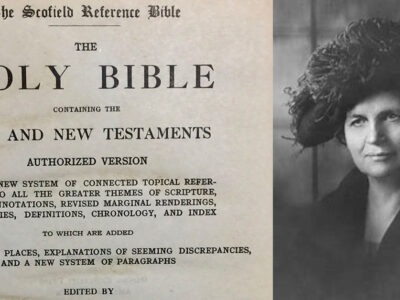
The spread of dispensationalism in America happened primarily through the promotion of the The Scofield Study Bible. Although much has been written about this, most people are completely unaware of one woman who in all likelihood played a role in the spread of The Scofield Study Bible’s popularity – Grace Livingston Hill. If you are not familiar with Hill, you can read more about her and see a list of her books in this post: Grace Livingston Hill, Beloved and Prolific Christian Author.
This connection between dispensationalism and Hill has long interested me because it seems like such an unlikely match. I finally took the time to find all of the references in the books I could and assemble it in one place for others who might find this an intriguing part of Christian (and American) history.
What follows are references where the Scofield Bible is specifically named in the novel. There are many other books where she mentions a study Bible with notes that help you understand things better, but she doesn’t label it a Scofield. I assume that is still what she is referencing, but did not include the specific name. It seems Grace thought fine grade dark blue leather was the color of choice when selecting a Bible as she mentions that style multiple times (Scofield or not).

Grace Livingston Hill Life Overview
Grace Livingston Hill was a best-selling author from the early twentieth century and is known as the pioneer of the Christian romance novel. According to Grok, her approximately 100 novels have sold over 100,000,000 copies over the past 13 decades.
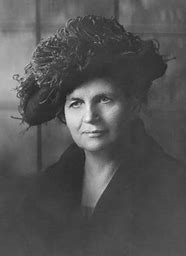
Born in 1865, Grace Livingston Hill’s father was a Presbyterian minister. Her first husband, Frank, was also a Presbyterian minister. (Frank died fairly young from appendicitis.) Despite these solid Presbyterian bona fides, Grace frequently featured the dispensational Scofield Bible in her stories.
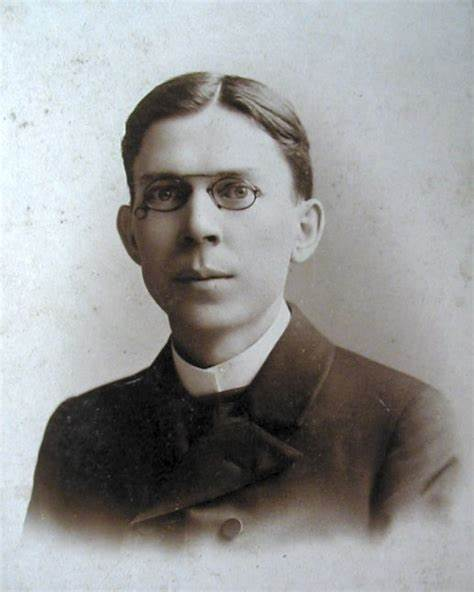
Grace was a prolific writer in large part because she had two young daughters and a mother to support. She wrote Sunday School materials, articles, and novels. For many years, she wrote and published three novels a year. The Bible and Christian faith are central to her stories. She has a clear delineation between good and evil. Her stories usually feature a redemptive theme and a happy ending.
Grace Livingston Hill Novels Mentioning the Scofield Bible
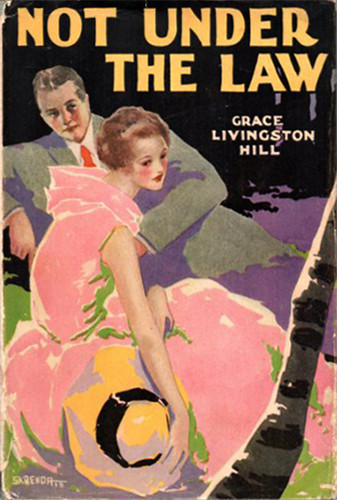
Not Under the Law (1925)
Not Under the Law (1925) was the first of Grace’s novels to mention a Scofield Bible. In the story, a young women who leaves home under duress buys a used Scofield Bible before anything else. One of the other characters, a man wrongly accused of a crime, also purchases a Scofield Bible. In both of the references to the man’s Bible, there is an explanation of how the Bible has notes and explanations about the various passages.
Found Treasure (1928)
Found Treasure (1928) contains a passing mention of a Scofield Bible that was given as a gift. (For a time, Grace use the pen name Marcia Macdonald.)

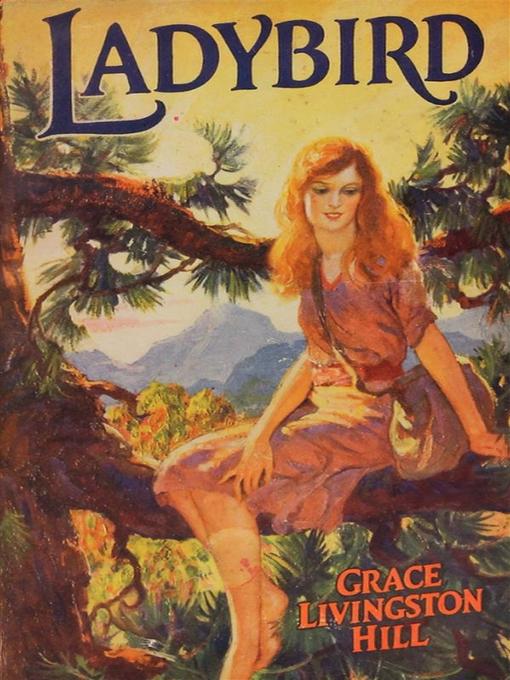
Ladybird (1930)
In Ladybird (1930), Fraley purchases:
a beautiful, expensive soft-leather Scofield Bible with India paper and clear type for Seagrave, because the salesman recommended it as being most popular with ministers on account of its wonderful notes…
Later in the story, Fraley purchases a similar Scofield Bible for herself.
So she was devouring the Book again as if it were a new book, looking up all the marginal references and reading all the enlightening footnotes and getting daily new light on the Word. It was all very precious.
She later makes the difficult choice to leave the Scofield Bible behind when forced to leave with the hope that those who need to read it will do so.
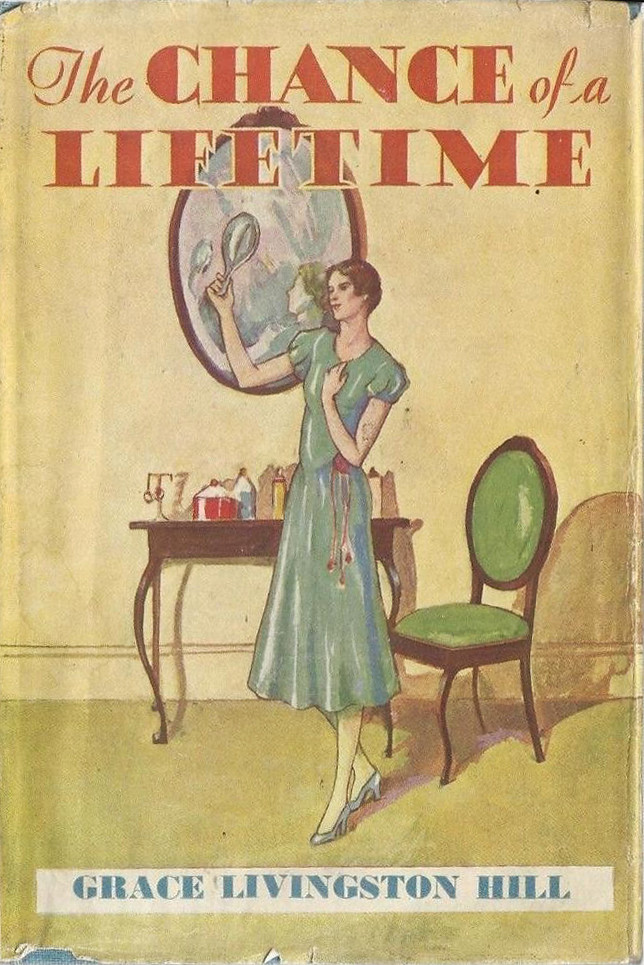
The Chance of a Lifetime (1931)
A gift of a Scofield Bible figures prominently in the story The Chance of a Lifetime (1931). When the gift is being discussed, one character remarks:
Those were Scofield Bibles, too, weren’t they? Boy! I’m glad about that, for I don’t think he knows the first thing about what the Bible means, and a Scofield Bible will be so helpful about understanding the dispensations and covenants and things like that.
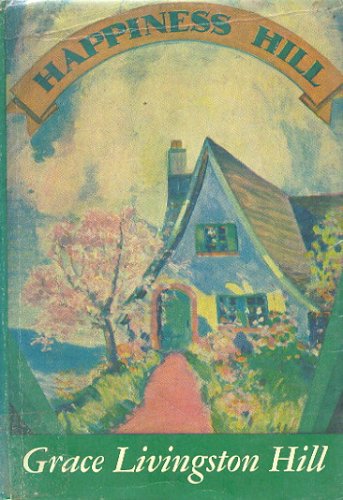
Happiness Hill (1932)
In Happiness Hill (1932), Jane’s Scofield Bible plays an important role in the story. It is described in various ways. One passage states:
It was centered about her Bible, the lovely new copy in real morocco, so small and soft and beautiful, with such thin paper and clear print, and those wonderful illuminating footnotes that made the text speak straight into one’s soul startlingly, because life fitted so perfectly into what the Book said…
Later we read:
She was presently lost in the wonder of that first footnote in her Scofield Bible. It told her of the eons of time between creation and re-creation. It opened to her mind the vast prospect of a world made out of nothing by an Almighty God, who created it beautiful and habitable, but a world that presently became mysteriously, cataclysmically wrecked by sin and remained dark and shapeless, uninhabitable, till God’s Spirit hovered over it, and called it into His new plan for it, a perfect dwelling place for man. In amazement her fingers fluttered through the leaves and found the references in Isaiah, Jeremiah, and Ezekiel that spoke of this strange catastrophe and what followed when God began to make over his world. It read like the most amazing truth she had ever heard in the light of this new knowledge. She was so thrilled that she did not stop at the limitation of a page, but turned the leaf and read on…
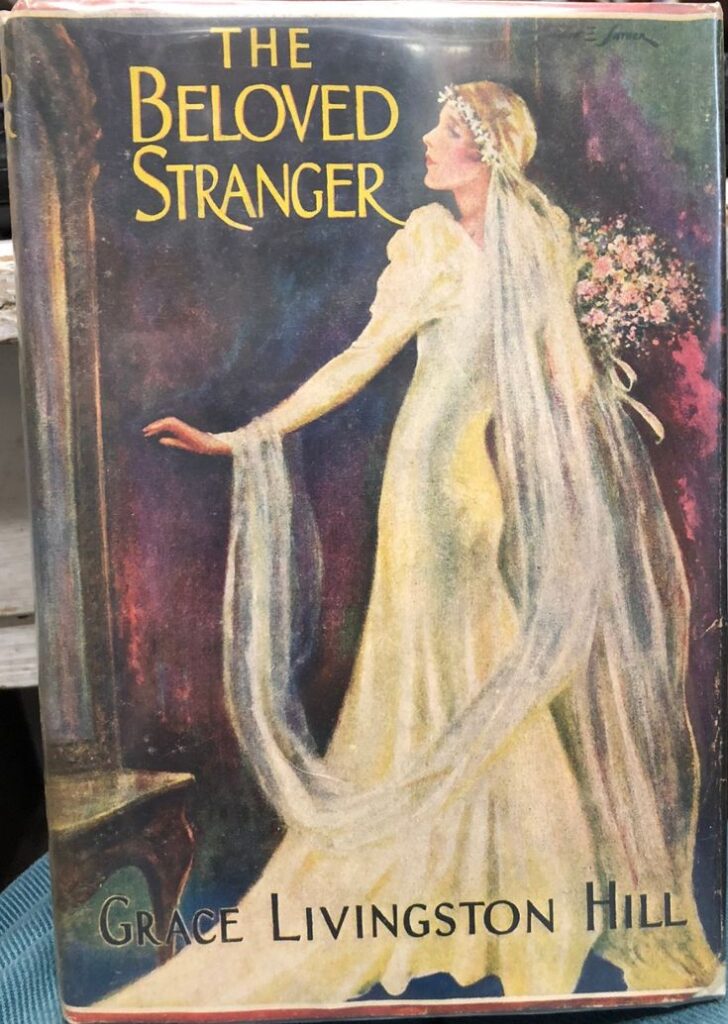
The Beloved Stranger (1933)
The Beloved Stranger (1933) features a young woman named Sherrill who comes to faith in Christ when invited to become part of a Bible class. After her first visit, she purchases some small books and is introduced to the Scofield Bible. The young man at the table explains:
Oh, it’s the regular text, of course… only it has a lot of helpful notes that make it pretty plain about the dispensations and symbolism and covenants and things. It helps a lot to have them right there on the page with the text, that’s all.
When Sherrill arrives home, she shows her purchase to her aunt and her aunt’s nurse. They discuss having heard about the Scofield Bible and that people say “it’s very enlightening.”
The Christmas Bride (1943)
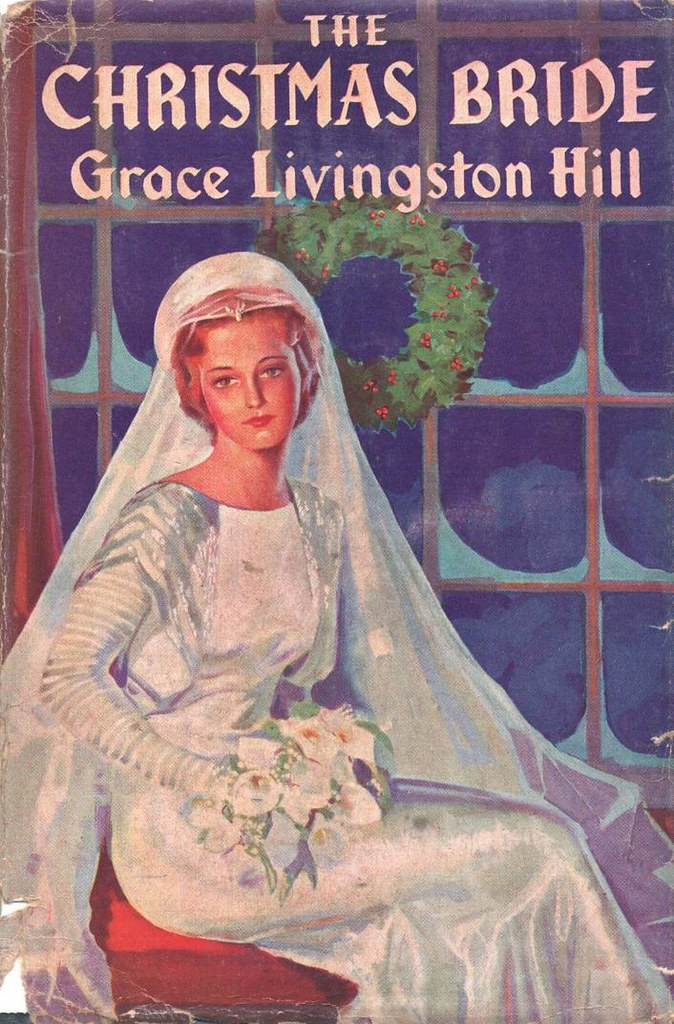
The Christmas Bride (1934) features not only a mention of a Scofield Bible, but also a sermon that features dispensational themes. Gregory purchases the Scofield Bible after he is saved. Regarding the Bible we read:
In the bookcase in his hotel room was a row of books that his friend had said would be helpful to him: a big concordance lay on his table beside his Scofield Bible…
Later Gregory goes to hear his friend speak at a Bible Conference where he preaches:
What’s wrong with the world? There are just four things wrong with the world today, four things that are out of place. First, the Jews are out of place. They belong in Palestine according to God’s covenant, and they are scattered over the world because of their sin of unbelief.
The Seventh Hour (1939)
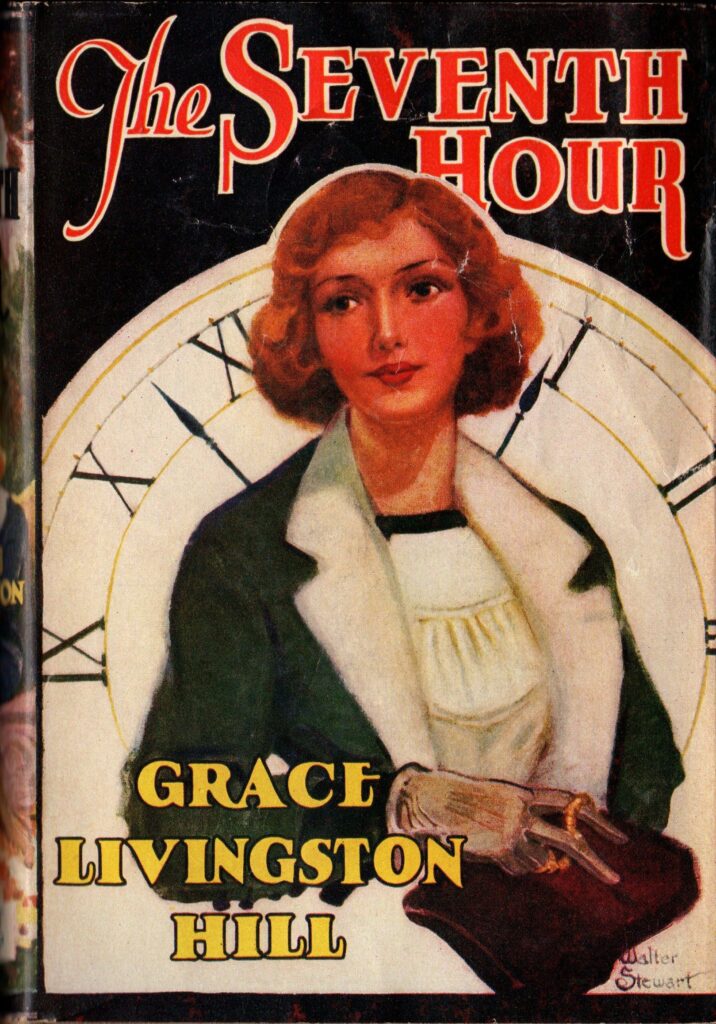
The Seventh Hour (1939) is the last novel to reference a Scofield Bible. We read:
And when he reached Boston one of his first acts, after he had made an appointment to meet the man he had come to see, was to go to a bookstore and purchase a lovely Bible, bound in genuine leather, dark blue, soft and flexible, with India paper and clear print, a Scofield that would give her help with its enlightening notes and references, in case she really wanted to know the truth and search for it.
Grace clearly thought the Scofield Bible was a valuable resource and shared it with her readers. How this fit with her Presbyterian beliefs, we will probably never understand. But she was firmly committed to sharing the Gospel and pointing people to salvation in Christ. We can all be thankful for the way the Lord has used her writing to that end for many generations – past, present, and future.

 Huckabee and Those Blessed By God
Leave a Reply