
• Skip to main content
  • Skip to after header navigation
  • Skip to site footer

Thinking About Theology

  • Home
  • About
  • My Doctrinal Beliefs
  • Donate
You are here: Home / Institutional Church & the Body of Christ / The Authority of the Pulpit Versus the Worship of All Believers

The Authority of the Pulpit Versus the Worship of All Believers

February 2, 2012
4 Comments

Post may contain affiliate links. Read my disclosure statement.

Jon Zens has written The Body with One Part? in response to John Piper’s explanation of why women are not allowed to read Scripture or pray in the worship service at his church. Piper first says:

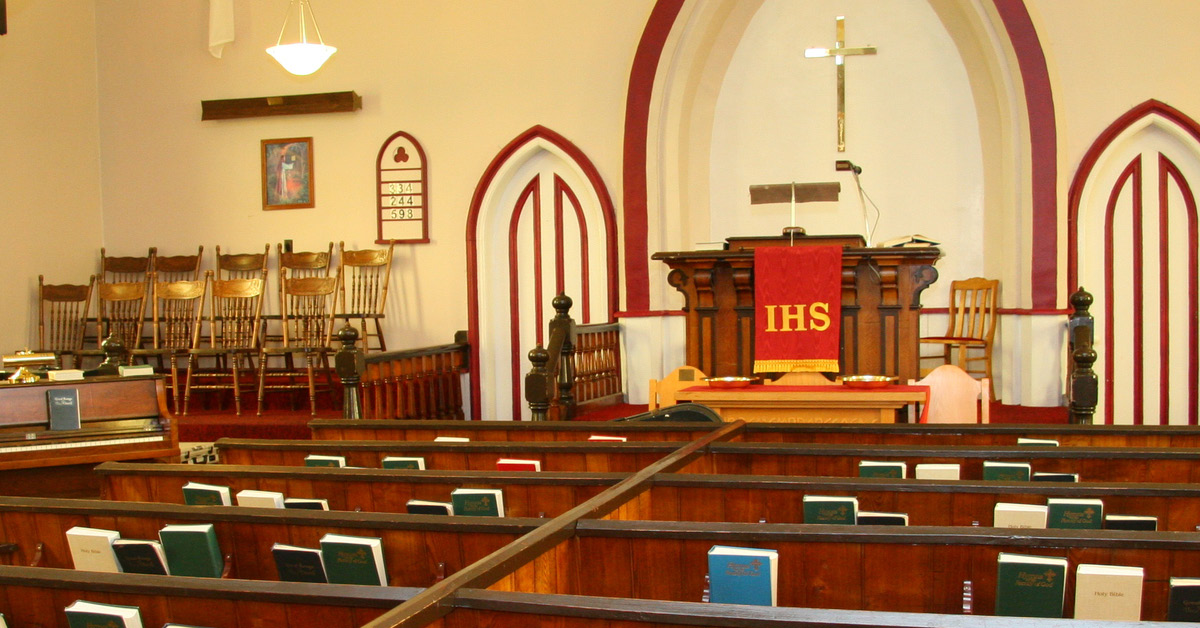
My reason is because—not that others have to see it this way—I view that moment and that place in the worship service as one of pastoral authority. The pulpit stands there symbolizing the word of God preached, and that’s what the elders are responsible to do.

Then Piper turns around and says:

It’s a pretty small, little place at Bethlehem. The pulpit is there, and those three things—the prayer of praise, the reading of the Scripture, and the preaching of the sermon—is a very, very small part of the life of this church. It’s big and important. But time-wise and ministry-wise it is a small thing.

So which is it?

Super important or a very small part?

It’s not a small thing to the women who are not allowed to participate in the service.

It’s not a small thing to the girls and young women who have no examples of godly women participating in the service.

And the pulpit is a symbol of pastoral authority? Can someone point out that Scripture to me? Was that in First Hesitations?

Zens correctly states (bold mine):

“Preaching” is mentioned in the comments above. The act of the sermon is the high point of the Protestant service. Yet in the New Testament – the collection of books that is said to be the rule of faith and practice by church leaders – there is no evidence concerning one person giving a weekly sermon. Most of the time in the NT “preaching” is an outreach activity among those who are outside of Christ. There is one time when “proclamation” in the setting of saints meeting together is mentioned, but this is a declaration by the whole church, not by the speech of one person (1 Cor. 11:26).

What we do see in the NT is a gathering of believers who are actively expressing Christ in various ways (1 Cor. 14). As William Barclay noted in 1956, “The really notable thing about an early Church service must have been that almost everyone came with a sense that he had both the privilege and the obligation of contributing something to it.”

Imagine if we went to church on Sunday with the expectation that we would be able to contribute something! To hear each week in person what God had done in the life of others that week, a passage of Scripture that had been significant, a song that they sang throughout the week, or simply a heartfelt prayer of “thank you” for their salvation? How many people would show up if they actually had an obligation to participate rather than take it all in and be entertained?

Zens later says (bold mine):

The answer to the opening question ended by trying to play down the significance of the pulpit. It is suggested that even though women cannot break the aura surrounding the pulpit with their presence, they can participate in many other important aspects of church life. The pulpit is “big and important,” but it “is a very, very small part of the life of this church.” To me, this just points out how a small thing time-wise can become the tail that wags the dog. Statistics show that 90% of people choose what church they go to by who is behind the pulpit and what comes from the voice behind the pulpit. Untold thousands of people drive unbelievably long distances to hear their favorite preacher.

Isn’t reality more along the lines that if you removed the pulpit from most churches, it would be their death-knell and they would go out of business?

We have so elevated the pulpit, the sermon and the pastor that we have no memory of the ethos of what went on in the early church when Christ was expressed by all in a gathering with no one leading from up front.

When I started getting serious about determining once and for all what I believed about the role of women in the church, I didn’t fully realize it would also cause me to question other long standing traditions.

And traditions they are.

The pulpit is a tradition. I always knew that, but I hadn’t fully connected all the dots.

I’m starting to think that the traditions themselves are one of the biggest hindrances to people fully understanding and embracing a full role of women in the church. People are so attached to their traditions and so firmly entrenched in their thinking that This. Is. The. Way. We. Do. Church. that they are loathe to think that perhaps something is amiss.

I said in an earlier post somewhere that I’m not even sure I think the way we “do” church today is best. I think a strong argument can be made from the Scriptures that we’ve complicated it and it bears little resemblance to what the early believers enjoyed.

Women participated in the gatherings of believers in the New Testament. There is no doubt about that. But with the church’s current obsession with authority (and male authoritarianism, at that), it leaves very little room for women to function freely as they did in the early church. Male authority is the sacred cow today. To even suggest that this view might be wrong and that women should be free to exercise their Spirit-given gifts will get you labeled all sorts of things and cause people to drop you like a hot potato.

Do we worship Jesus or a pulpit? Is our focus on Jesus, the Word of God Incarnate, or is it on the pulpit, the symbol of the Word of God?

I’ll take the real thing instead of a perceived symbol any day.

Visited 14 times, 1 visit(s) today

Category: Institutional Church & the Body of ChristTag: John Piper

About Sallie Borrink

I’m a Christian, wife, homeschool mom, battle-seasoned blogger, and happy warrior for Christ. I discuss how Christians who don’t fit dominant institutional church and cultural narratives are already living truthfully and faithfully in the body of Christ.

“Now the Bereans were more noble-minded than the Thessalonians, for they received the message with great eagerness and examined the Scriptures every day to see if these teachings were true.” Acts 17:11

You Might Also Like

What Is Big Eva?

Why Does Baptist Communion Feel Like a Funeral?

How Christians Gathered in the 1st Century | Dr. Tom Wadsworth

Previous Post:The Inverse Statement on Biblical Manhood and Womanhood
Next Post:John Piper on Christianity’s Masculine Feel and How God Views Women

Reader Interactions

Comments

  1. David

    February 2, 2012 at 10:53 am

    Actually, don’t the pulpit directives in scripture come right after the part about the measurements for the organ?

    Reply
  2. Sallie

    February 2, 2012 at 11:00 am

    LOL! 🙂

    Reply
  3. becky

    February 2, 2012 at 1:49 pm

    To even suggest that this view might be wrong and that women should be free to exercise their Spirit-given gifts will get you labeled all sorts of things and cause people to drop you like a hot potato.

    Sad but true.

    Reply
  4. Don Johnson

    April 17, 2012 at 9:27 pm

    ISV 1Co 14:26 What, then, does this mean, brothers? When you gather, everyone has a psalm, teaching, revelation, other language, or interpretation. Everything must be done for upbuilding.

    Reply

Leave a Reply Cancel reply

Your email address will not be published. Required fields are marked *


Sidebar

Sallie Schaaf Borrink

I’m a Christian, wife, homeschool mom, battle-seasoned blogger, and happy warrior for Christ. I discuss how Christians who don’t fit dominant institutional church and cultural narratives are already living truthfully and faithfully in the body of Christ.

“Now the Bereans were more noble-minded than the Thessalonians, for they received the message with great eagerness and examined the Scriptures every day to see if these teachings were true.” Acts 17:11

Get new posts by email

Powered by follow.it

Popular Today

  • Being Bound By Denominational Creeds and Confessions SIMPLETheologically Trapped By Denominational Confessions…
  • Joel Webbon on Men Owning Women, Everything SIMPLEJoel Webbon on the Husband Owning His Wife,…
  • My Baptist Roots Protected Me Against Calvinism SIMPLEMy Baptist Roots Protected Me Against Calvinism
  • cropped-TAT-favicon-square.pngBest-selling Devotional Edited by Sarah Bessey Has…
  • The Judeo-Christian Deception- Historical Origins and Modern Consequences SIMPLEThe Judeo-Christian Deception: Historical Origins…
  • Bible open to Romans 6:23The Destructive Teachings of Lordship Salvation and…
  • It's Okay To Be White - Scott Adams and the Shifting Overton WindowIt’s Okay To Be White – Scott Adams and…
  • Your Ecclesiology Will Determine Your View of Women Functioning in the Church SIMPLEYour Ecclesiology Will Determine Your View of Women…
  • Patriarchy Complementarianism and EgalitarianismPatriarchy, Complementarianism, and Egalitarianism…
  • cropped-TAT-favicon-square.pngHouse Testimony Re: Border and Trafficking

Categories

  • A War On White People (40)
  • Battle for Western Civilization (27)
  • Big Tech, MSM, and Social Media (4)
  • Christian Theology Deep Dives (58)
  • Conspiracy Theories & Weird Stories (32)
  • Elections (5)
  • Eschatology (27)
  • Faithful Christian Living in Difficult Times (4)
  • Illegal Immigration (22)
  • Institutional Church & the Body of Christ (32)
  • Israel & Jews (40)
  • Leaving Calvinism (25)
  • Marriage (3)
  • Money, Currency & Financial (1)
  • Psychological Warfare (30)
  • Q & The Great Awakening (12)
  • Reformed Patriarchy (17)
  • Women in the Body of Christ (100)

A Christian Nation

"The real object of the first amendment was not to countenance, much less to advance, Mahometanism, or Judaism, or infidelity, by prostrating Christianity; but to exclude all rivalry among christian sects, and to prevent any national ecclesiastical establishment, which should give to a hierarchy the exclusive patronage of the national government."

Joseph Story (Associate Justice of the Supreme Court), Commentaries on the Constitution of the United States (1833), § 1871.

countenance: To favor; to encourage by opinion or words; To encourage; to appear in defense (Websters Dictionary 1828)

Tags

1 Corinthians (Bible) 1 Peter (Bible) 1 Timothy (Bible) 2 Kings (Bible) Acts (Bible) Alana Lagares Anti-semitism Botkin Sisters Charlie & Erika Kirk Christian Nationalism Christian Reformed Church (CRC) Church Fathers Colossians (Bible) Cyrus Scofield & Scofield Bible Dispensationalism Doug Wilson Galatians (Bible) Genesis (Bible) Hebrews (Bible) Jeremiah (Bible) Joel Webbon John (Bible) John MacArthur John Piper Judeo-Christian Luke (Bible) Mark (Bible) Mark Driscoll Matt Chandler Matthew (Bible) Moscow Mood Nephilim & Fallen Angels Numbers (Bible) Pagan Christianity President Trump Preterism Recommended Videos Revelation (Bible) Romans (Bible) The Gospel Coalition The Obamas Tim Challies True Womanhood Blog Vision Forum Zionism

Recent Comments

  • Sallie Borrink on I\’m Really Not Into the Postmodern Messiness
  • Sallie Borrink on I\’m Really Not Into the Postmodern Messiness
  • Sallie Borrink on DataRepublican: A color revolution got exposed. Now, conservatives must hold fast to God.
  • Sallie Borrink on Identifying and Working Out My Theological Framework
  • Ticia on Joel Webbon on the Husband Owning His Wife, Children, and Everything Else
  • Sallie Borrink on Who Are the Traitors in the Trump Administration?
  • Sallie Borrink on Who Are the Traitors in the Trump Administration?

My Other Website


Archives

What Can I Help You Find Today?

Home | About | Donate | Disclaimers & Disclosures | Privacy Policy | Contact

Copyright © 2005–2026 · Thinking About Theology · All Rights Reserved · Powered by Mai Theme


Scroll Up